Boos, disapproval mark tensions during Iowa House Study Bill 668 subcommittee meeting at Iowa Capitol
Iowans argue Iowa HSB 668 would deepen inequality at the state level in education, public safety, judicial system, among others.
This article was originally published in Black Iowa News on Feb 5, 2026.
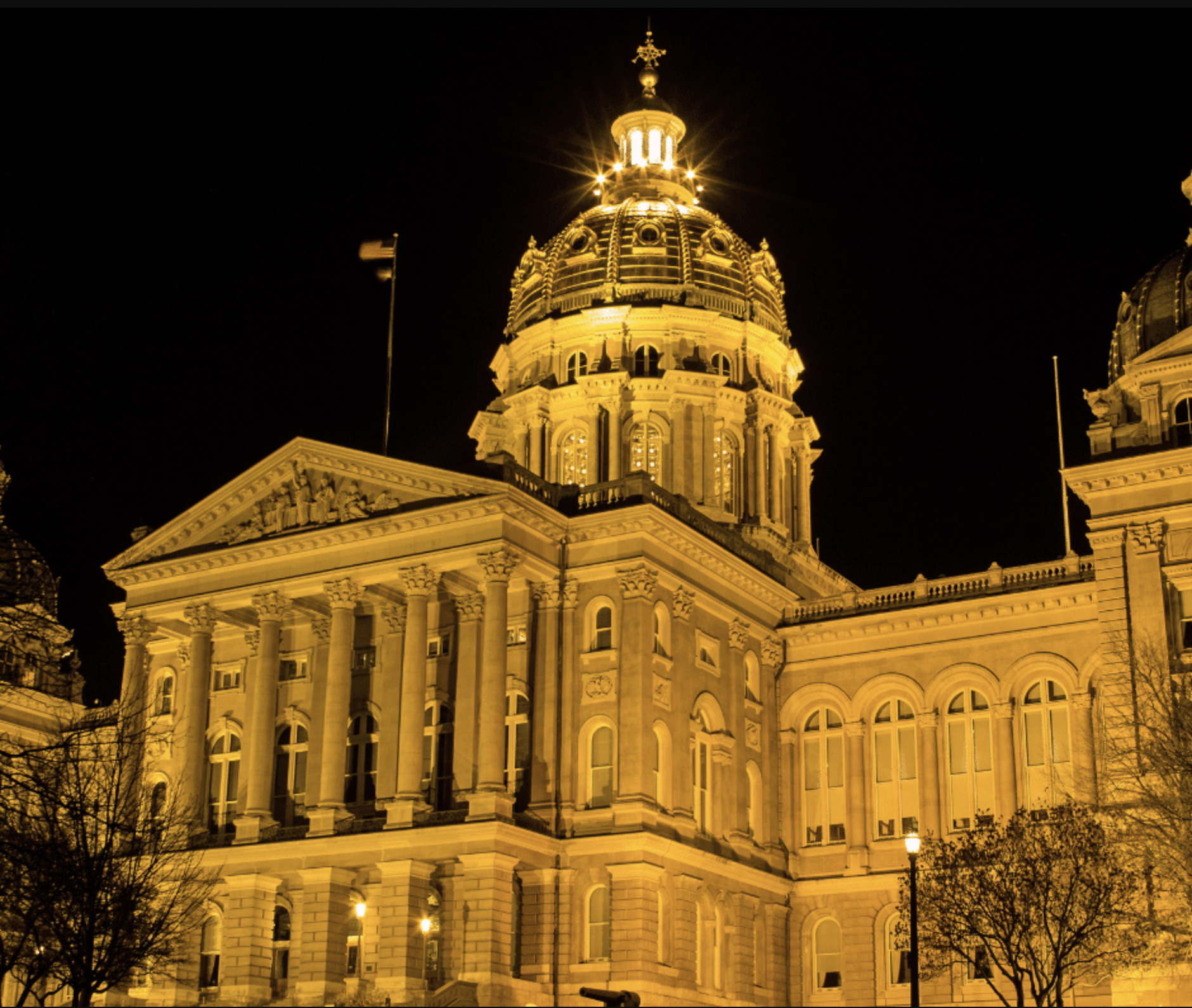
Iowa State Capitol. Credit: Iowa State Capitol.
Iowa state lawmakers and community members gathered Thursday at the Iowa State Capitol to learn more about Iowa House Study Bill 668, with the majority of residents and state lawmakers in attendance voicing their disapproval — with some even booing while a panel member spoke. The bill removes race-based, gender and citizenship considerations and accountability from state policies, programs and professional licensure requirements.

At least four state lawmakers criticized bill proponents for rushing the subcommittee hearing without enough notice. The bill was approved by the subcommittee.

“Despite the less than 24-hour notice, the people have arrived. And had they received more than 24-hour notice, I could only imagine that this room would hold the amount of people that really would’ve wanted to be here,” said Sen. Renee Hardman, shown in the meeting video produced by the Bleeding Heartland. “But you silenced them by not giving people enough notice for their voices to be heard.”

Al Womble, state political director of the Iowa Federation of Labor, told Black Iowa News if this bill is approved, there would be grave consequences for BIPOC communities statewide.

“Unfortunately, without the sorts of de-escalation training that officers in West Des Moines receive, without that sort of cultural sensitivity training, we’re looking at situations where there’s bound to be more acts of confrontation that take place that are neither good nor safe for the officer, the individual involved, or the general public,” Womble said.

He went on to say that instead of helping fund education, aiding small businesses, and providing more affordable housing, time is being wasted on something that will not help the economy.

“We’re spending our time on something that is destructive instead of something that’s going to help make this state a better place. I mean, our motto as a state is ‘Our liberties we prize and our rights we will maintain,” Womble said. “And right now it looks like ‘Our liberties we prize and our rights we will refrain from giving to anybody who is a person of color.’”

Many Iowans wrote public comments on the legislature’s public comment section roundly criticizing the bill.

“As a Black woman, a Sudanese American, and a born citizen of Iowa, I am firmly against HSB 668. We cannot continue to desensitize ourselves to blatant corruption,” Munia Awadalla commented on the site. “The protections we have are already minimal, and this bill is to strip away even those, including affirmative action, minority and women student programs and mandatory bias training. Programs created by us, for us [to] exist because inequity exists.”

The proposal, which was first introduced on the afternoon of Feb. 4, would cause sweeping changes to state agencies, systems and educational settings.

Some of the major changes include:
Eliminating the academic incentives for minorities program, the minority and women educators enhancement program, and the college-bound programStriking the requirement for the director of the Iowa law enforcement academy requiring racial and cultural awareness training, the requirement for a law enforcement agency to provide annual training to officers on issues relating to de-escalation techniques and the prevention of bias and the requirement for the Iowa law enforcement academy to develop and disseminate related training guidelinesStriking the obligation of school districts, area education agencies and community colleges to submit an annual report about affirmative action and equal opportunity accomplishments and programs to the director of the department of educationEliminating provisions stating that an applicant for a license to work in health care, architecture, engineering, land surveying or real estate is not ineligible because of citizenship and that an applicant for certification as a public accountant is not ineligible due to citizenshipRepealing the requirement for an application for a grant from a state agency to include a minority impact statement